Thursday, November 30, 2017

Chicago South Side Kennedy Park and The Brown and White

Lawrence Norris

"One of the greatest things about Kennedy Park was the huge cement drinking fountain that was shaped like a birdbath that stood at attention on the northeast end of the park. It sent a healthy shot of cold water constantly into the air that served park patrons and everyone else who walked past the park on Western Avenue. The fountain was gigantic and round and the bubbler was as thick as a garden hose. No one could walk past the fountain without taking a drink. Even the biggest kid in the neighborhood could get his fill in about 20 seconds.  And it was cold wonderful Lake Michigan water.  

       The fountain also served as a meeting place for groups of guys and girls. As I glanced toward the fountain, I thought about a couple summers back. My buddy, Tom “the Pope” Adams posed a big question right there to Susie “the Matchmaker” O'Halloran in a boy-girl gathering on a warm summer evening. Tom took Susie to one side and asked in a hushed tone, “Can you find out if Renee Smith would consider hanging out.”  This move took a lot of guts since Tom was a stout pimply 5'5” and Rene was a sleek blond of 5'9".  Tom was my best friend and he had more guts than anyone at St. Sean’s. Although small, he would fight anyone at the drop of a hat so his stature among the guys was huge.  Tom was also unique in that he was the last white boy who moved out of St. Leonard’s parish, the parish my dad had grown up in... "

Excerpt from: Lawrence Norris The Brown and White Copyright Sporting Chance Press.

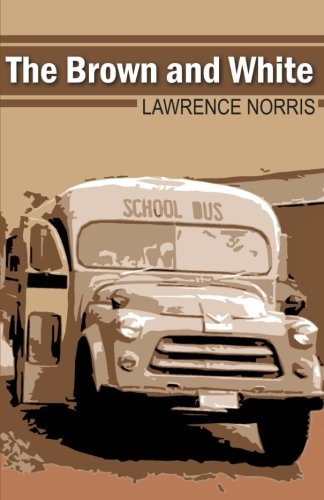
Forty plus years in the making, The Brown and White is a fictionalized memoir that tells the story of Collin Callaghan's freshman year at a Chicago Catholic High School. Collin is a white boy who is living in turbulent times in a changing city. He clings to his neighborhood and his family as he heads out each day with his classmates on the Brown and White, the ancient school bus driven by free-spirited Willie. Memorable characters abound as this story unfolds. Collin's loveable family, especially his Irish Catholic policeman father and his Irish immigrant mother face life together. Collin and classmates blaze their own humorous and passionate trail through the late 1960s. A unique cast of terrific teachers are there to see the boys through. Laughs and life meet readers head on as they travel on the Brown and White.


Thursday, November 16, 2017

Skip the Leading This and That and Toss Out the Whopping, too!

I was researcing one of those now-common job titles, "Customer Success Manager," trying to figure out just what these people do for a living. And I found some research where people with this title  from a number of different companies talked about what they did.  But what was interesting is that all the people who had this job title worked for companies that were self-described "leading providers." It was unanimous. They didn't just work for marketing companies, sales companies, product and service providers--they were working for companies that were all leading providers--100%. 

I am often amazed at just how much American business copies from each other. I wondered how you might want to trump you job title by being a leading person in your craft at a leading company in your industry. 

"Hi, I am Stuart, the Leading Customer Success Manager from Temportie  Inc. the Leading provider of fast fusion foods in the  energy lossenges market."

It all sounds so stupid.

I remember as a college student stopping in to the a little restaturant that was in fact a double wide trailor just a short distance from the Missiouri River in a tiny town in Missiouri.  The restaurant was called the Whopping Big Cheeseburger Diner. It was late at night, but there was a big crowd of locals, probably hard-working men from the Rockwell Plant and other like businesses nearby. We were very hungry, but we were also foolish college students who needed to grow up a bit.

For some reason, we couldn't get over the fact the place had "whopping big" cheeseburgers.  We walked past a lot of  crowded tables and sat at the counter.  A waitress came over after a few minutes to take our order.  We could all see by the look on her face that the diner likely didn't have time for  students at this place--so she said in a loud voice, "what'll be boys, it's getting late so we need take your order right quick." The plates from the previous dinners who had the seats before us hadn't been removed yet. My friend Schmitty from Peoria was the first to order and he looked up and said, "I'll take a whopping big cheeseburger and a whopping big order of fries with a whopping big coke." Down on the dirty plate in front of Schmitty was a whole piece of bacon that the previous dinner had not eaten.  Schmitty picked it up and ate it and smiled at the waitress.

After each of us had placed a similar order--everything "whopping big," the waitress had enough of us and she threatened to throw us out of the restaurant if we said one more annoying word. 

We were hungry, we complied. But I learned a language lesson that night. 

A "leading provider" overused makes about as much sense as everything "whopping big" in a diner--it is tacky and doesn't fool anyone. If I was your Customer Success Manager and you were leading anything, I'd suggest that you drop it!

--------------------------------------------------------


The Brown and White
Forty plus years in the making, The Brown and White is a fictionalized memoir that tells the story of Collin Callaghan's freshman year at a Chicago Catholic High School. Collin is a white boy who is living in turbulent times in a changing city. He clings to his neighborhood and his family as he heads out each day with his classmates on the Brown and White, the ancient school bus driven by free-spirited Willie. Memorable characters abound as this story unfolds. Collin's loveable family, especially his Irish Catholic policeman father and his Irish immigrant mother face life together. Collin and classmates blaze their own humorous and passionate trail through the late 1960s. A unique cast of terrific teachers are there to see the boys through. Laughs and life meet readers head on as they travel on the Brown and White.


John R. Powers Motivated Me to Write The Brown and White

I am one of those Catholics who loves his faith and the culture surrounding it.  Being a good Catholic is not so easy and most of us do struggle.  But I think struggle, suffering, prayer and to a certain degree, laughter is what our faith and our lives are all about. 


Back in the day, John R. Powers was for many of us, the voice of Catholicism.  Powers wrote a number of books about Catholics that were funny and captured the times.  His  books brought a lot of us together at a very tough time. It was post Vatican II, Vietnam raged on, civil rights struggles were everywhere, and life was just changing too fast for a lot of people.  Powers books looked back a few years to a time that might not have been better, but a time that was in a lot of ways more innocent.  I think in reaction to his books, many of us Catholics felt more connected and we came to appreciate our past more.  John wrote The Last Catholic in America about his grade school days and he wrote Do Patent Leather Shoes Really Reflect Up about his high school days. He wrote other books as well, but these two are the ones most of us would rememeber. 

I was so taken by John and his stories that I took up writing my own Catholic book called The Brown and White (high school) and I have a grade school eBook called Callaghan Goes to St. Cajetan

Powers Last Catholic was a great read and when we got a copy at home, everyone read it within a few weeks.  When he published Patent Leather Shoes, it became a favorite again and a few years later a play was written based on the book. The Patent Leather Shoes went on and on for decades. It played in Chicago and other parts of the country as well.  I know several people who read Last Catholic and Patent Leather  every year.  I've read Last Catholic several times and listened to the recording of it in my car during the Christmas season.  

In Power's Last Catholic he writes about life in the Seven Holy Hills nieghborhood in Chicago and at St. Bastion's Grade  School.  One of the episodes from the book is an account of St. Bastion's Pastor, Fr. O'Reilly, and Garbage Lady Annie. Fr. O'Reilly is a larger than life take charge pompous pastor who is leading his parish to construct a new church on property that is adjacent to a bag lady and  garbage picker called Garbage Lady Annie.  Some parishioners believe the priest should back plans to destroy Annie's house--he doesn't and has his reasons. Powers shows Fr. O'Reilly in one light, yes funny, and then finishes the story off showing a heroic side of him and a heroic side of Gargage Annie at the same time. Powers characters act the way you might expect them sometimes and then display a different side.  And in many ways, that is Catholicism to me. The faithful has high asperations, often unmet in funny ways, but we understand our humanity as well. 

The Brown and White
In The Brown and White,  I go back to end of the 1960s and show another side of Catholic culture and our faith.  


Friday, November 10, 2017

I Am a Big Jack Higgins Fan and He Has New Book Coming Out

Higgins Latest
I spent a lot time in my car each day and that went on for decades. Getting the latest Jack Higgins book on tape listening on my commute and reading parts of the books in print in the late evening was a real treat for me.  

At my job at a publishing company I was reading complex business documents and writing about professional authors, book schedules, and other tasks on a tight timeline.  I worked on indexes on New Years Eve and we had deadlines that often ran right through the Christmas season each year--it was all about time and money.  

Higgins was refreshing. It was a thrill to step into my car and get started each day. Often his novels were read by Patrick Macnee the former star of the Avengers--and he hammed it up big time, but it was fun.  I especially loved the Sean Dillon series, about the smallish man with an IRA background come to fight the wrongs that often faced the United States and Great Britian. 

Here's the publisher's description of the new book:

“The bell rings at midnight, as death requires it.”—Irish proverb

In Ulster, Northern Ireland, a petty criminal kills a woman in a drunken car crash. Her sons swear revenge. In London, Sean Dillon and his colleagues in the “Prime Minister’s private army,” fresh from defeating a deadly al-Qaeda operation, receive a warning: You may think you have weakened us, but you have only made us stronger. In Washington, D.C., a special projects director with the CIA, frustrated at not getting permission from the President for his daring anti-terrorism plan, decides to put it in motion anyway. He knows he’s right—the nation will thank him later.


Soon, the ripples from these events will meet and overlap, creating havoc in their wake. Desperate men will act, secrets will be revealed—and the midnight bell will toll.

--------------------------------------------------------


Larry Norris is the author of  The Brown and White

The Brown and White and the South Side of Chicago

Patrolman John Norris
Jim "Skinny" Sheehan and Mike "Houli" Houlihan are the kind of guys I grew up with on the South Side of Chicago. In fact, I knew Jim's family and his mom taught me at Saint Cajetan's Grammar School.  I also attended Mount Carmel High School where Houli had gone a few years before me. I did not have the pleasure of going to school with any of the Houlihans, but maybe that's best.  I was on the famous Skinny and Houli Show a few months ago talking about my book, The Brown and White

The South Side experiences were so affixed to my soul that I had carried around a manuscript on my high school days with me for the better part of 40 years and worked on it periodically. I went to Benedictine College in Kansas and after graduation I started a publishing career. Time passed, decades went by, and finally, I  published The Brown and White

We all had some tough times during the late 1960s when The Brown and White takes place.  I was born in 1953 and many of us who were raised in Chicago during those years of the 50s, 60s and 70s, recall memories of a world that could be a little stingy, overcrowded with fellow Baby Boomers, and Catholic. Those who look back at the time with joy, and there are many who do, get past the worts in their own lives and see a genuine and funny  time, not necessarily one they would sign up for again.

As you get older, you realize that certain events can knock you off the rails. Living in those days, if you were "chubby," you were probably called "fat." If you were bad at your schoolwork, you were probably thought of us "dumb." And if you weren't very good at sports, some people would have said you "stunk." If you looked around your classroom and figured out that although you might fit into one of those categories, about 90% of your classmates did as well. If you realize that, you might have been able to laugh it off. And that's a great secret in life. Most of us are not supermen or superwomen especially in high school. And in part, that's what The Brown and White is all about. It's a time of insecurity and laughs, a book to which many people can relate and have a good laugh and maybe a good cry. [It's $12.50]

On the other hand, there are some people who cannot relate to it at all.  I have to wonder if it is because there lives were so different or because they look at their lives through rose-colored glasses.

My Dad was an Irish Catholic Chicago cop.  My parents rolled out a plan to have a bunch of kids like their parents and never seemed to worry about the problem with finances--until it was too late. That was not uncommon and I'd have to say that in most ways we did not suffer, although at times, life could be embarrassing. I remember my dad working 2 and 3 jobs.  We started jobs early ourselves:  Lawns and show shoveling at age 12, restaurant work at age 14, and retail at 16.

We had a neighbor who was a lieutenant on the police department and I had cut his lawn for a few years. He and his wife came to the restaurant where I worked.  He told me one night that my dad (a patrolman) could never do anything for me, but if I needed help, come and see him.  In an awkward way, he was trying to give me the message that he had clout--I could see him if I decided the police force was in my future. I mentioned the conversation to my mother, and she grew very angry.  It was a very frustrating petty time in many ways. Sometimes you felt like you were in a caste system in Chicago--no escape.

I was off the rails on the job issue for a while, but in other ways I was especially loved by  my parents.  And I think much more love than the lieutenant showed his kids. My dad almost died when I was in high school, but the Good Lord took pity on us. But we had tragedies as well. And our faith was important and a beacon although at times things got a little foggy. But that was part of it, too. Our faith was there and strong at times, but sometimes we nearly fell off the rails and life was not neat and tidy--it was messy. And again, that's the theme of The Brown and White.

My high school years were tough in Chicago.  Race riots, insecurity everywhere, and war protests. But we clung to our neighborhood, friends, family and faith--and we rode it out the best way we could. It was messy and imperfect.  It's in The Brown and White.


The Saint, the Nettles, and Seamus Heaney's Poem

St. Kevin 9th or 10th Century
For the Irish, their stories of saints and religious figures are often accepted on faith. The Irish don't seem to care about the exact details; the true nature of the person or the deed is somehow more important. In some ways it is the poetry of the situation holds sway.

Glendalough in the Wicklow Mountains is famous for its monastic school and its founder, St. Kevin (of the Nettles). Born near Rathdrum at the end of the fifth century, Kevin means fair-begotten and it is said he was the first man named Kevin. St. Kevin was tutored at first by St. Petroc of Cornwall on the Scriptures. Then he studied under his uncle, St. Eugenius, who had studied in the famous British monastery of Rosnat. [Rosnat is mentioned in many places as special place of learning, but scholars cannot agree on its early location. Lost in the mist of history.]

The Nettles


According to Irish tradition, Young Kevin was a handsome youth and one day was followed by a young maiden into the woods.  When he realized, he was in danger of committing a sin, he threw himself into a bed of nettles--and earned his nickname--Kevin of the Nettles.  Some sources suggest he turned the nettles on the girl as well. 

Not Allowed to Live as a Hermit


Kevin then retired into the wilds of the Glendalough valley, where he lived in a cave by himself until holy men and others gathered around him. He was asked to build a monastery. And like other such men, his humility and self-denial attracted disciples and a school of learning.  This monastery founded several others, and around it grew a town. St. Kevin served as abbot for several years, but once the monastery was well-established, he withdrew once again to live as a hermit. Four years later, he returned to Glendalough at a monk’s request and served as abbot until his death at age 120. 

St. Kevin was a great protector of animals. Many of the St. Kevin’s miracles also involve nature and animals. His feast day is June 3rd. He died in 618 and received his canonization in 1903. 

Seamus Heaney  wrote a poem based on a traditional story about St. Kevin. A black bird landed on St. Kevin’s hand—the bird laid its eggs in his hand and St. Kevin held the bird until the eggs hatched and the young birds were ready to leave. 


Despite attacks by Vikings over the years, Glendalough survived until the Normans destroyed the monastery in 1214 A.D. A visitor’s center has an audio visual introduction and a model of the monastic site on display. Other building of interest are present. Glendalough is one of the top attraction on Ireland’s Ancient East.  

----------------------------------------
Larry Norris is the publisher of Patrick McCaskey's Pilgrimage and Norris's own book, The Brown and White

Friday, October 27, 2017

A Brief Moment in Time When Nothing You Had Done Before Seemed Important or Relevant.

Here is an except from my book, The Brown and White, which is Copyright by Sporting Chance Press: 

Perhaps you can remember  a brief moment in time when nothing you had done before seemed important or relevant. Perhaps you can remember a time when you were aware of every sound, every image and every smell around you. Perhaps you can remember a time when you felt your entire body tense like a wild animal sensing a life and death struggle about to occur. If you could weave all these feelings into one, then you can understand how we felt that first Friday afternoon on the Brown and White. That Friday night was the school's first football game and for the upperclassmen, it was time for their ticket-checking ritual.

After the bus was on its way for about fifteen minutes and pulling out of the most dangerous neighborhood in the world, a team of upperclassmen came forward. Perry Houlan, a big lanky guy with dark short cropped hair, a pug nose and a face full of pimples spoke for the upperclassmen.

"Ok all you freshmen need to pull out your football tickets. This is an official ticket check and no excuses are taken. So dig into your pockets and let's see 'em!"

The first kid, John Riley, a little nerdy freckle faced red haired kid squirmed nervously in his seat and began to plead with Houlan.

"I was going to buy my ticket at the gate tonight. I didn’t have the money today to buy my ticket and lunch. Gimme a break."

Before Riley could get another word out he was pulled out of his seat and thrown to the back of the bus to the howls of the mob that awaited him. The bus rocked sideways as the weight shifted from one side to the other. Riley was pounced on by a gang of upperclassmen. Bloodcurdling screams came from the little freshman followed by menacing howls of the boys in the back of the bus. In a flash, the older boys pulled up Riley's shirt and grabbed the elastic waist band of his underwear and began pulling towards the roof of the bus. Riley's underwear was no match for his weight and it was immediately shredded into several pieces. Riley had been “webbed.”

More Freshmen who did not have tickets were sent to the back of the bus one by one. The terrorist upperclassmen pounced on the high school Lilliputians and grabbed their “wares” (underwear) one right after another. If the underwear was strong, the underclassman would actually bounce a few times and hit his head on the ceiling before the wares would finally rip and come off in the hands of the menacing upperclassmen.

The sheer terror we felt that day was incredible, but through it all we began to laugh about it as we saw some of our compatriots come back to their seats apparently no “worse for the wear."

After the entire underclassmen were checked for tickets and those without summarily "webbed", the pieces of underwear were collected. The shreds were passed on to the upperclassmen in window seats who waited until we passed a particular intersection on 95th Street that was always populated with a large number of Catholic girls on their way home from the Saint Ann’s, an all-girls’ school, that attracted many of the southwest side girls. The remnants were tossed to the girls with some appropriate ceremony and pronouncement.

“Here you go girls, we wanted to give you a ticker-tape parade.” Or, “here’s some “holey” relics for you girls.”

Since I was determined that I was not going to experience the "Webbing Ceremony" and had been tipped off beforehand, I faithfully bought my football tickets. However, the next Friday the upperclassmen decided that every freshman was going to get webbed.

All at once a gang of upperclassmen came to the front of the bus and we were all summarily hurdled to the back of the bus to insure that we all participated in the ritual at least once. I was pushed towards the back of the bus feeling as if I was in suspended animation. I could see dozens of arms and hands come after my underwear all at once. I was so nervous I did not notice that I was being scratched as my underwear began to disintegrate before my eyes. I was glad to see my own personal wares were torn up so badly that no one could really tell whether they were completely clean. I could only imagine what might happen if the upperclassmen had pulled out a handful of brown-stained wares from someone.

Unfortunately, my friend Hanni, who was pushed down the aisle just after me, was wearing boxer shorts with little red triangles that menacing Friday. As the hands from Hell began to grope wildly at his waist, a loud hoot was sounded in the melee. After bouncing from one side of the bus to the other and up and down for what seemed like dozens of time, his boxers finally tore in half with one section going to a group on his left and the second going to a group on his right. The upperclassmen quickly made a couple flags from the rags and waved them out the window for most of the trip that night. Poor Hanni was one sore freshman.

The webbing initiation rite was one that all those who rode the brown and white remember until the day they die. It was a high school bungee jump. Once you experienced it, you felt like you had somehow matured immeasurably. Once you had the underwear torn out from under you, a lot of the other crap you experienced seemed minor by comparison. You were ready for most anything.

On that Friday night when all the freshmen were webbed, we were numbed by the experience. It seemed like the bus sailed in slow motion to the famous intersection on 95th where the Saint Ann’s High School girls waited for public busses in large groups. At the sight of the girls, we woke from the shock and our hormones kicked in. We all congregated to one side of the bus to see the girls and as usual the bus tipped to the one side. The windows came down with a metallic bang and we could see the record-breaking amount of shredded underwear fly out the windows like confetti. Hanni’s red triangles floated down on one plaid skirted girl with braces. The poor girl’s mouth was open and a shred of cloth caught on the metal and hung over her lower lip. She swatted it off like it was a fly and gave us all a stern look and shook her fist up at the bus.

I turned to Hanni and pointed at the girl who was sneering at us.

“She doesn’t like your confetti, Hanni and by the look of her, she’d probably doesn’t like much of anything. She’d be a good teacher,” I joked.

“No,” said Hanni, “I’d say she’ll work for the park district, one of those snotty people who hand out the balls and bats―making you sign in blood for ‘em.”

Toward the back of the bus we heard an upper classman say, “Hey, I know that girl―she is the girl friend of one of the football players, Jim Duggan.” The bus grew quiet for a few seconds as all the heads turned around and around as if turrets on a tank to see if Duggan was present. As soon as it was determined that Duggan was not present, conversation continued. Dollar, who was sitting in front of Hanni and I, said in a husky voice, “It doesn’t matter whoever she is dating, she is still a b#*@h.”

I shook my head in disbelief at Dollar’s statement. “The man must have a death wish, “ I whispered to Hanni. Duggan’s girlfriend was no great beauty, but Duggan was a big ugly lineman, who must have outweighed Dollar by a hundred pounds. “It’ll catch up to Dollar,” I said.

Some of the other girls who received the confetti snow fall look annoyed with their lips forming the words “gross” or “yuck,” but most of them just looked up and laughed. Most of the girls did not take us too seriously. If nothing else, the Brown and White was great entertainment.

As the bus pulled away from the High School girls, I looked up at the large review mirror that hung over our elfin bus driver’s head. The old boy Willie had his famous nearly toothless grin going strong. He didn’t say anything, but you could tell that he was proud of us and happy that another class had withstood the web ceremony on his old Brown and White.

We had our little tickertape parade honoring the beauty of Catholic high school girls and we celebrated our coming of age at the same time. I thanked God that my older sisters who had graced that same corner may years previously had graduated long before my days at Mount St. Mary’s. I was also thankful that my little sister was a few years behind me at Saint Sean’s and was not yet there.

Copyright 2016, Lawrence M. Norris

Amazon Description of The Brown and White.